What happened
NASA's Perseverance rover has detected "mini-lightning" on Mars, a groundbreaking discovery linked to dust devils. These small electrical discharges, recorded by audio and electromagnetic sensors, suggest Mars is a more electrically active world than previously understood. This finding has implications for...
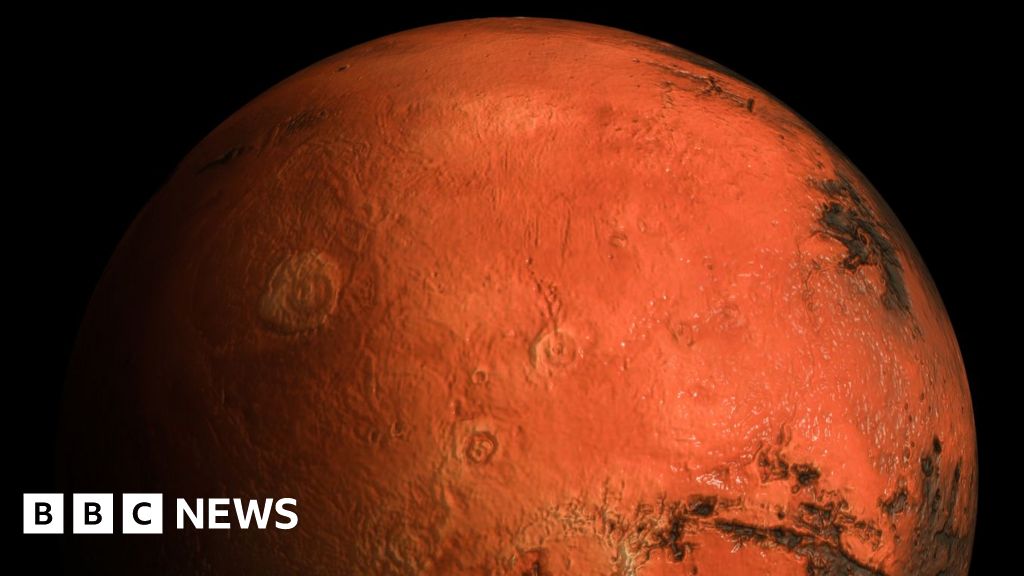
Scientists believe they have recorded electrical activity in the Martian atmosphere for the first time, suggesting the planet is capable of lightning.Nasa's Perseverance rover, which touched down on Mars in 2021, was sent to search for signs of biology and has spent the last four years exploring the Jezero Crater region.
Electrical discharges nicknamed "mini lightning" were picked up from audio and electromagnetic recordings made by the rover's SuperCam instrument.Scientists hope new instruments for measuring atmospheric discharges and more-sensitive cameras could be sent to Mars to try to confirm the findings.A team of researchers from France analysed 28 hours of microphone recordings made by the Nasa rover over two Martian years (or 1,374 Earth days).
They found that electrical discharges were normally associated with dust devils and dust storm fronts.Dust devils are small whirlwinds that form from hot air rising from the ground, and their internal movements can give rise to electrical discharges.Lead author of the research Dr Baptiste Chide told news agency Reuters: "These discharges represent a major discovery, with direct implications for Martian atmospheric chemistry, climate, habitability and the future of robotic and human exploration."
He and other scientists at the Institute for Research in Astrophysics and Planetology in France believe that Mars now joins Earth, Saturn and Jupiter as planets known to have atmospheric electrical activity.Particle physicist Dr Daniel Pritchard wrote in scientific journal Nature that, although the recordings would "provide persuasive evidence of dust-induced discharges", because the discharges were only heard and not seen, "some doubt will inevitably remain as to whether this really was Martian lightning".
He added: "Given the history of this field, the debate is likely to continue for some time."In September this year, scientists found rocks with unusual markings on Mars. The intriguing markings, nicknamed leopard spots and poppy seeds, contain minerals produced by chemical reactions that could be associated with ancient microbes.
It is possible the minerals were produced by natural geological processes, but Nasa said the features could be the clearest signs of life ever found.Today, Mars is a cold and arid desert. But billions of years ago there is evidence that it had a thick atmosphere and water, making it a promising place to look for past life.
Perseverance was dispatched to the Jezero Crater because it showed qualities that may have meant it was once conducive to life, including signs it was once a delta when Mars could sustain liquid surface water.
Source coverage
Okay, so I've just been reading this BBC article, and my initial thought is, this is pretty significant. The title says "Lightning detected on Mars," and that really caught my eye. Let me break down what I've learned:
First, the key details: It's from the BBC, Fiona Nimoni is the author, and it was published on November 28th, 2025. They're referencing recordings made over two Martian years, which translates to about 1,374 Earth days, so this is based on quite a lot of data. The Perseverance rover's SuperCam instrument picked up...
Deeper analysis
Full source content
Scientists believe they have recorded electrical activity in the Martian atmosphere for the first time, suggesting the planet is capable of lightning.Nasa's Perseverance rover, which touched down on Mars in 2021, was sent to search for signs of biology and has spent the last four years exploring the Jezero Crater region.
Electrical discharges nicknamed "mini lightning" were picked up from audio and electromagnetic recordings made by the rover's SuperCam instrument.Scientists hope new instruments for measuring atmospheric discharges and more-sensitive cameras could be sent to Mars to try to confirm the findings.A team of researchers from France analysed 28 hours of microphone recordings made by the Nasa rover over two Martian years (or 1,374 Earth days).
They found that electrical discharges were normally associated with dust devils and dust storm fronts.Dust devils are small whirlwinds that form from hot air rising from the ground, and their internal movements can give rise to electrical discharges.Lead author of the research Dr Baptiste Chide told news agency Reuters: "These discharges represent a major discovery, with direct implications for Martian atmospheric chemistry, climate, habitability and the future of robotic and human exploration."
He and other scientists at the Institute for Research in Astrophysics and Planetology in France believe that Mars now joins Earth, Saturn and Jupiter as planets known to have atmospheric electrical activity.Particle physicist Dr Daniel Pritchard wrote in scientific journal Nature that, although the recordings would "provide persuasive evidence of dust-induced discharges", because the discharges were only heard and not seen, "some doubt will inevitably remain as to whether this really was Martian lightning".
He added: "Given the history of this field, the debate is likely to continue for some time."In September this year, scientists found rocks with unusual markings on Mars. The intriguing markings, nicknamed leopard spots and poppy seeds, contain minerals produced by chemical reactions that could be associated with ancient microbes.
It is possible the minerals were produced by natural geological processes, but Nasa said the features could be the clearest signs of life ever found.Today, Mars is a cold and arid desert. But billions of years ago there is evidence that it had a thick atmosphere and water, making it a promising place to look for past life.
Perseverance was dispatched to the Jezero Crater because it showed qualities that may have meant it was once conducive to life, including signs it was once a delta when Mars could sustain liquid surface water.
How this page is built
Goose Pod turns cited reporting into a public episode summary first, then pairs that summary with audio playback so listeners can check the source material before they decide how deeply to engage.
The goal is to make this page useful as a news landing page first, while still giving listeners transcript access, related episodes, and direct links back to the original publishers.