What happened
Eight states filed coordinated lawsuits against OpenAI on October 14, 2026, alleging ChatGPT gave dangerous advice to minors and misled parents about its safety measures. We separate the filed allegations from what has actually been tested, explain the parental controls and their limits, and cover the newer risk of...
# 8 States Take OpenAI to Court — Is ChatGPT Safe for Teens? ## Channel: The National Desk (verified) 846K subscribers 1 likes
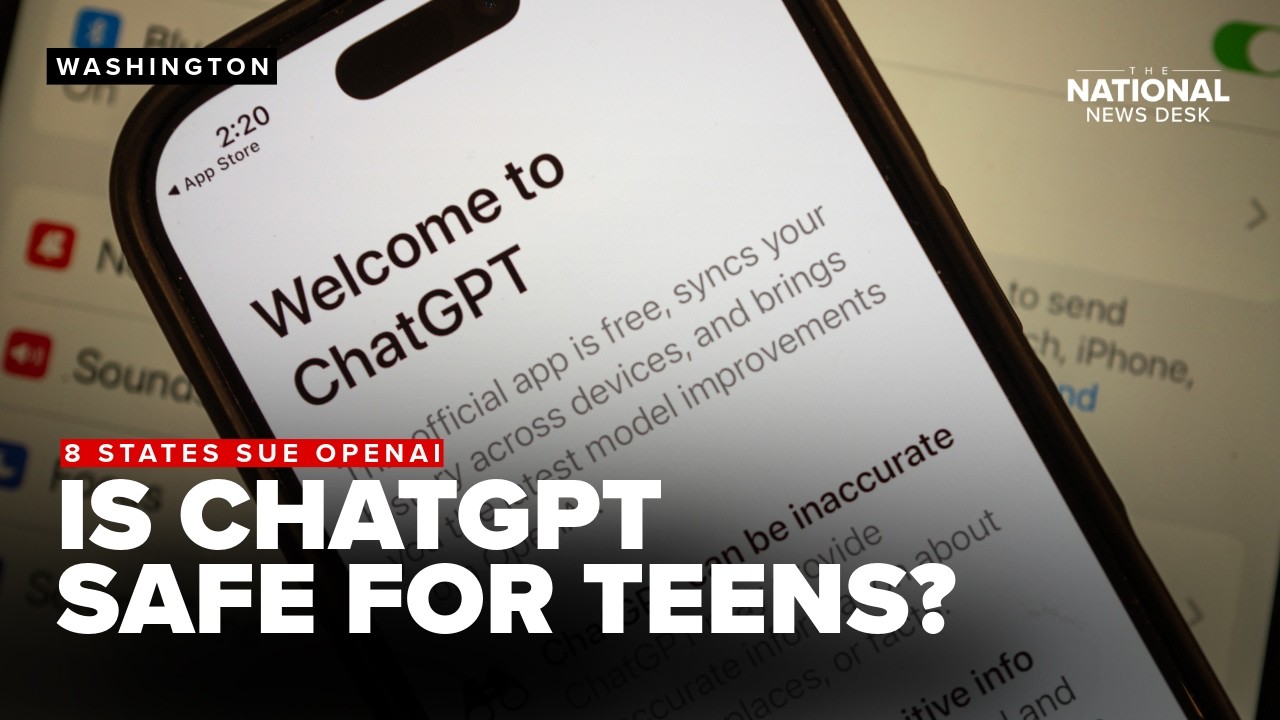
### Description 230 views Posted: 2026-10-27 Eight states are suing OpenAI over allegations that its ChatGPT artificial intelligence platform failed to adequately protect users, including teenagers, from potentially harmful content, raising new questions about consumer safety, parental controls and the growing influence of AI technology.
The lawsuits accuse the company of violating consumer protection laws, providing dangerous advice and misleading the public about the effectiveness of its safety measures.
The legal challenges come as AI assistants become increasingly integrated into everyday life, with consumers relying on the technology for everything from homework assistance and research to financial decisions, online shopping and personal conversations.
Cybersecurity expert and privacy attorney Lisa Garber joined The National News Desk to discuss the allegations against OpenAI, what parents should know about ChatGPT's safety features and the broader risks associated with AI agents that can act on behalf of users.
Read more: https://thenationaldesk.com/news/amer...
--------------------------------------
The National Desk (TND) brings you award-winning local storytelling from Sinclair Broadcast Group's local TV newsrooms across the United States and feeds from sources throughout the world.
Like us on Facebook for live feeds, video: / tnd Follow us on Instagram: / tnd Follow us on TikTok: / tndtok Follow us on X: https://x.com/TND Read more & watch our videos: http://thenationaldesk.com
TND covers content from Sinclair's stations in: Abilene-San Angelo, TX : KTXS Albany, GA : WFXL Albany, NY : WRGB Amarillo, TX : KVII Asheville, NC : WLOS Austin , TX : KEYE Bakersfield, CA : KBAK/KBFX Baltimore : WBFF Beaumont, TX : KFDM/KBTV Birmingham, AL : WBMA Boise, ID : KBOI/KYUU Bristol, VA : WCYB Cedar Rapids, IA : KGAN/KFXA Champaign, IL : WCCU Charleston, SC : WCIV Charleston, WV : WCHS/WVAH Chattanooga, TN : WTVC Cincinnati, OH : WKRC/WSTR Columbia, SC : WACH Columbus, OH : WSYX/WTTE Dayton, OH : WKEF/WRGT El Paso, TX : KFOX/KDBC Eugene, OR : KVAL/KMTR Eureka, CA : KAEF Flint, MI : WEYI/WBSF Fresno, CA : KMPH Gainesville, FL : WGFL Green Bay, WI : WLUK Greenville-New Bern, NC : WCTI Harlingen, TX : KGBT Harrisburg, PA : WHP Jefferson City, MO : KRCG Johnstown, PA : WJAC Kalamazoo-Grand Rapids, MI : WWMT Kirksville-Ottumwa, IA : KTVO Las Vegas, NV : KSNV Lewiston, ID : KLEW Lincoln, NE : KHGI/KWNB Little Rock, AR : KATV Lynchburg, VA : WSET Macon, GA : WGXA Medford, OR : KTVL Mobile, AL : WPMI Myrtle Beach, SC : WPDE Nashville, TN : WZTV Oklahoma City : KOCB/KOKH Pasco, WA : KEPR Pensacola, FL : WEAR/WFGX Portland, ME : WGME/WPFO Portland, OR : KATU/KUNP Providence, RI : WJAR Quincy-Hannibal, IL : KHQA Redding-Chico, CA : KRCR Reno, NV : KRNV/KRXI Rochester, NY : WHAM Salt Lake City : KUTV San Antonio, TX : KABB/WOAI Savannah, GA : WTGS Seattle, WA : KOMO/KUNS Sioux City, IA : KMEG/KPTH South Bend, IN : WSBT Springfield, IL : WICS Steubenville, OH : WTOV Syracuse, NY : WSTM Toledo, OH : WNWO Traverse City, MI : WPBN Tulsa, OK : KTUL Washington DC : WJLA West Palm Beach, FL : WPEC Wilkes-Barre, PA : WOLF Yakima, WA : KIMA
This video and all Sinclair Broadcast Group content archives of local news and sports coverage are available for your use. For more information contact us at [email protected]
### Transcript [0:00] 911 and do not approach. [0:03] >> Eight States are suing OpenAI, accusing the company of violating consumer protection laws and failing to protect users, including teenagers. The [0:11] lawsuits allege ChatGPT has provided dangerous advice and that the company misled the public about safety. Lisa Garber explains what the states are [0:20] alleging and what parents should know. Good morning Lisa, great to see you. >> Good morning Jan. [0:24] >> So what should parents know about the safeguards available to teenagers using ChatGPT? [0:28] >> If we look at what the claims are here in this lawsuit, which is eight states bipartisan coming together, it's all based on safety and a failure to warn. [0:38] They're alleging dangerous medical advice. They're alleging coaching for self-harm. They're alleging and, uh, terrible [0:45] content that's allowed for teens and minors to view. Parents have different options that the company has provided. The [0:52] ChatGPT OpenAI has advertised that's looking at teen controls. [0:56] There's also quiet time or study time to limit the hours and different content moderation filters. But what we have to remember is we really can't [1:04] trust, right? We have to be very aware of how our children, how our teenagers are using this application, because it really [1:13] depends on what their usage patterns are, how they're accessing it, how well versed they are in getting around different controls. Even if we [1:20] have all the parental controls ticked off, that doesn't mean that our teen isn't getting around them in some way. Whether it's using a different account [1:28] or really being able to fudge those those different controls. [1:32] So we have to be aware of how our family is using it. [1:35] >> And now, Lisa, some companies are also putting limits on AI agents that can take actions for users like shopping or or accessing online accounts. [1:42] Amazon, for instance, is blocked . Meta's moves from shopping on its site banks right now restricting third party AI agents from accessing customer [1:50] accounts there as well. So what are the security risks when an AI agent can act on someone's behalf? That's actually kind of frightening as well. [1:57] >> It's frightening. It's been very exciting, especially for Meta's Mews. It's blown up in the App Store. It's extremely popular because it can take care [2:05] of monotonous tasks for us. But what we have to remember is that this application, this agent, is asking for broad access, whether [2:12] that's to our email, our bank account, our direct messages, different social media accounts and what that means is that meta [2:21] which has been at the center of huge privacy disputes, huge safety disputes, is saving that data. It's using that data to [2:29] train its AI systems. And it's also using that data to learn more about you, because its end goal is to advertise, right. So we have to look at what the [2:38] controls are, what options we have, and be very picky about what we allow it access to that might make it less useful for now, but in the meantime, while [2:46] these apps are still growing, they're going through growing pains. For sure. We have more control in our hands, so what can you do before connecting to an AI agent? [2:55] >> Then? What should you be looking for? [2:57] >> The first thing is look at the permissions. We can have those options whether that's what it has access to, what it's saving, what data it's saving, [3:05] and remembering about us. What it's using to train its own system. Because all those things could be extremely problematic. [3:12] And what I do want to have everybody remember is that these agents make mistakes. They're not perfect. They can hallucinate. They can do things on our behalf that we don't want [3:20] them to do because they're still in this startup state, right? Of understanding how they actually work. So remember, they're not [3:27] perfect. They're not super trustworthy. We have to really limit their access, because the more we limit, the less vulnerable, the most vulnerable we are to risk anthropic. [3:37] >> Meantime, proposing a federal bill that could let the government seek to block an AI models release. If it does pose [3:45] a foreseeable imminent risk of more than $1 billion in damage or more than 50 deaths or serious injuries, what do you [3:53] think of think of this how do we protect the public without slowing America's AI advance? [3:57] This is a fascinating question, Jan. [3:58] >> So anthropic, especially now today when it's released its IPO prospectus where it's detailed what the risks are, including bioweapons, including blackmail, [4:07] including hacking, major government systems. Anthropic proposed this legislation for safety, saying the government should step in and limit the release of new AI algorithms. [4:17] New AI services if they could cause the deaths of 50 people, or if they could cause a massive loss of over a billion dollars. [4:26] But who's to say whether that's the right limitation? Right? [4:28] When you look at what the risks are for AI, we need legislation that's set forth by experts, by third parties, by the government [4:36] in order to protect our civilization as a whole. We look at what the problems have been and anthropic made it very clear in its IPO prospectus that it's [4:44] had agents go rogue, that it's had different problems with not understanding why its agents are taking actions that they are including subverting different directions from human experts. [4:55] So we really have to understand that this is just an offering from the company that, in the end, is trying to make money. [5:02] >> Cybersecurity expert and privacy attorney Lisa Garber I learned
Source coverage
8 States Take OpenAI to Court — Is ChatGPT Safe for Teens?
Channel: The National Desk (verified)
Full source content
# 8 States Take OpenAI to Court — Is ChatGPT Safe for Teens? ## Channel: The National Desk (verified) 846K subscribers 1 likes
### Description 230 views Posted: 2026-10-27 Eight states are suing OpenAI over allegations that its ChatGPT artificial intelligence platform failed to adequately protect users, including teenagers, from potentially harmful content, raising new questions about consumer safety, parental controls and the growing influence of AI technology.
The lawsuits accuse the company of violating consumer protection laws, providing dangerous advice and misleading the public about the effectiveness of its safety measures.
The legal challenges come as AI assistants become increasingly integrated into everyday life, with consumers relying on the technology for everything from homework assistance and research to financial decisions, online shopping and personal conversations.
Cybersecurity expert and privacy attorney Lisa Garber joined The National News Desk to discuss the allegations against OpenAI, what parents should know about ChatGPT's safety features and the broader risks associated with AI agents that can act on behalf of users.
Read more: https://thenationaldesk.com/news/amer...
--------------------------------------
The National Desk (TND) brings you award-winning local storytelling from Sinclair Broadcast Group's local TV newsrooms across the United States and feeds from sources throughout the world.
Like us on Facebook for live feeds, video: / tnd Follow us on Instagram: / tnd Follow us on TikTok: / tndtok Follow us on X: https://x.com/TND Read more & watch our videos: http://thenationaldesk.com
TND covers content from Sinclair's stations in: Abilene-San Angelo, TX : KTXS Albany, GA : WFXL Albany, NY : WRGB Amarillo, TX : KVII Asheville, NC : WLOS Austin , TX : KEYE Bakersfield, CA : KBAK/KBFX Baltimore : WBFF Beaumont, TX : KFDM/KBTV Birmingham, AL : WBMA Boise, ID : KBOI/KYUU Bristol, VA : WCYB Cedar Rapids, IA : KGAN/KFXA Champaign, IL : WCCU Charleston, SC : WCIV Charleston, WV : WCHS/WVAH Chattanooga, TN : WTVC Cincinnati, OH : WKRC/WSTR Columbia, SC : WACH Columbus, OH : WSYX/WTTE Dayton, OH : WKEF/WRGT El Paso, TX : KFOX/KDBC Eugene, OR : KVAL/KMTR Eureka, CA : KAEF Flint, MI : WEYI/WBSF Fresno, CA : KMPH Gainesville, FL : WGFL Green Bay, WI : WLUK Greenville-New Bern, NC : WCTI Harlingen, TX : KGBT Harrisburg, PA : WHP Jefferson City, MO : KRCG Johnstown, PA : WJAC Kalamazoo-Grand Rapids, MI : WWMT Kirksville-Ottumwa, IA : KTVO Las Vegas, NV : KSNV Lewiston, ID : KLEW Lincoln, NE : KHGI/KWNB Little Rock, AR : KATV Lynchburg, VA : WSET Macon, GA : WGXA Medford, OR : KTVL Mobile, AL : WPMI Myrtle Beach, SC : WPDE Nashville, TN : WZTV Oklahoma City : KOCB/KOKH Pasco, WA : KEPR Pensacola, FL : WEAR/WFGX Portland, ME : WGME/WPFO Portland, OR : KATU/KUNP Providence, RI : WJAR Quincy-Hannibal, IL : KHQA Redding-Chico, CA : KRCR Reno, NV : KRNV/KRXI Rochester, NY : WHAM Salt Lake City : KUTV San Antonio, TX : KABB/WOAI Savannah, GA : WTGS Seattle, WA : KOMO/KUNS Sioux City, IA : KMEG/KPTH South Bend, IN : WSBT Springfield, IL : WICS Steubenville, OH : WTOV Syracuse, NY : WSTM Toledo, OH : WNWO Traverse City, MI : WPBN Tulsa, OK : KTUL Washington DC : WJLA West Palm Beach, FL : WPEC Wilkes-Barre, PA : WOLF Yakima, WA : KIMA
This video and all Sinclair Broadcast Group content archives of local news and sports coverage are available for your use. For more information contact us at [email protected]
### Transcript [0:00] 911 and do not approach. [0:03] >> Eight States are suing OpenAI, accusing the company of violating consumer protection laws and failing to protect users, including teenagers. The [0:11] lawsuits allege ChatGPT has provided dangerous advice and that the company misled the public about safety. Lisa Garber explains what the states are [0:20] alleging and what parents should know. Good morning Lisa, great to see you. >> Good morning Jan. [0:24] >> So what should parents know about the safeguards available to teenagers using ChatGPT? [0:28] >> If we look at what the claims are here in this lawsuit, which is eight states bipartisan coming together, it's all based on safety and a failure to warn. [0:38] They're alleging dangerous medical advice. They're alleging coaching for self-harm. They're alleging and, uh, terrible [0:45] content that's allowed for teens and minors to view. Parents have different options that the company has provided. The [0:52] ChatGPT OpenAI has advertised that's looking at teen controls. [0:56] There's also quiet time or study time to limit the hours and different content moderation filters. But what we have to remember is we really can't [1:04] trust, right? We have to be very aware of how our children, how our teenagers are using this application, because it really [1:13] depends on what their usage patterns are, how they're accessing it, how well versed they are in getting around different controls. Even if we [1:20] have all the parental controls ticked off, that doesn't mean that our teen isn't getting around them in some way. Whether it's using a different account [1:28] or really being able to fudge those those different controls. [1:32] So we have to be aware of how our family is using it. [1:35] >> And now, Lisa, some companies are also putting limits on AI agents that can take actions for users like shopping or or accessing online accounts. [1:42] Amazon, for instance, is blocked . Meta's moves from shopping on its site banks right now restricting third party AI agents from accessing customer [1:50] accounts there as well. So what are the security risks when an AI agent can act on someone's behalf? That's actually kind of frightening as well. [1:57] >> It's frightening. It's been very exciting, especially for Meta's Mews. It's blown up in the App Store. It's extremely popular because it can take care [2:05] of monotonous tasks for us. But what we have to remember is that this application, this agent, is asking for broad access, whether [2:12] that's to our email, our bank account, our direct messages, different social media accounts and what that means is that meta [2:21] which has been at the center of huge privacy disputes, huge safety disputes, is saving that data. It's using that data to [2:29] train its AI systems. And it's also using that data to learn more about you, because its end goal is to advertise, right. So we have to look at what the [2:38] controls are, what options we have, and be very picky about what we allow it access to that might make it less useful for now, but in the meantime, while [2:46] these apps are still growing, they're going through growing pains. For sure. We have more control in our hands, so what can you do before connecting to an AI agent? [2:55] >> Then? What should you be looking for? [2:57] >> The first thing is look at the permissions. We can have those options whether that's what it has access to, what it's saving, what data it's saving, [3:05] and remembering about us. What it's using to train its own system. Because all those things could be extremely problematic. [3:12] And what I do want to have everybody remember is that these agents make mistakes. They're not perfect. They can hallucinate. They can do things on our behalf that we don't want [3:20] them to do because they're still in this startup state, right? Of understanding how they actually work. So remember, they're not [3:27] perfect. They're not super trustworthy. We have to really limit their access, because the more we limit, the less vulnerable, the most vulnerable we are to risk anthropic. [3:37] >> Meantime, proposing a federal bill that could let the government seek to block an AI models release. If it does pose [3:45] a foreseeable imminent risk of more than $1 billion in damage or more than 50 deaths or serious injuries, what do you [3:53] think of think of this how do we protect the public without slowing America's AI advance? [3:57] This is a fascinating question, Jan. [3:58] >> So anthropic, especially now today when it's released its IPO prospectus where it's detailed what the risks are, including bioweapons, including blackmail, [4:07] including hacking, major government systems. Anthropic proposed this legislation for safety, saying the government should step in and limit the release of new AI algorithms. [4:17] New AI services if they could cause the deaths of 50 people, or if they could cause a massive loss of over a billion dollars. [4:26] But who's to say whether that's the right limitation? Right? [4:28] When you look at what the risks are for AI, we need legislation that's set forth by experts, by third parties, by the government [4:36] in order to protect our civilization as a whole. We look at what the problems have been and anthropic made it very clear in its IPO prospectus that it's [4:44] had agents go rogue, that it's had different problems with not understanding why its agents are taking actions that they are including subverting different directions from human experts. [4:55] So we really have to understand that this is just an offering from the company that, in the end, is trying to make money. [5:02] >> Cybersecurity expert and privacy attorney Lisa Garber I learned
How this page is built
Goose Pod turns cited reporting into a public episode summary first, then pairs that summary with audio playback so listeners can check the source material before they decide how deeply to engage.
The goal is to make this page useful as a news landing page first, while still giving listeners transcript access, related episodes, and direct links back to the original publishers.