
What happened
微软AI负责人警告勿创造失控的超级智能(ASI),认为应以“人文主义AI”为目标。科技界对此分歧,乐观派视ASI为进步引擎,保守派则强调安全与控制。公众担忧加剧,呼吁AI公司坦诚风险,并优先发展安全、公平、有用的AI,而非追求不可控的ASI。
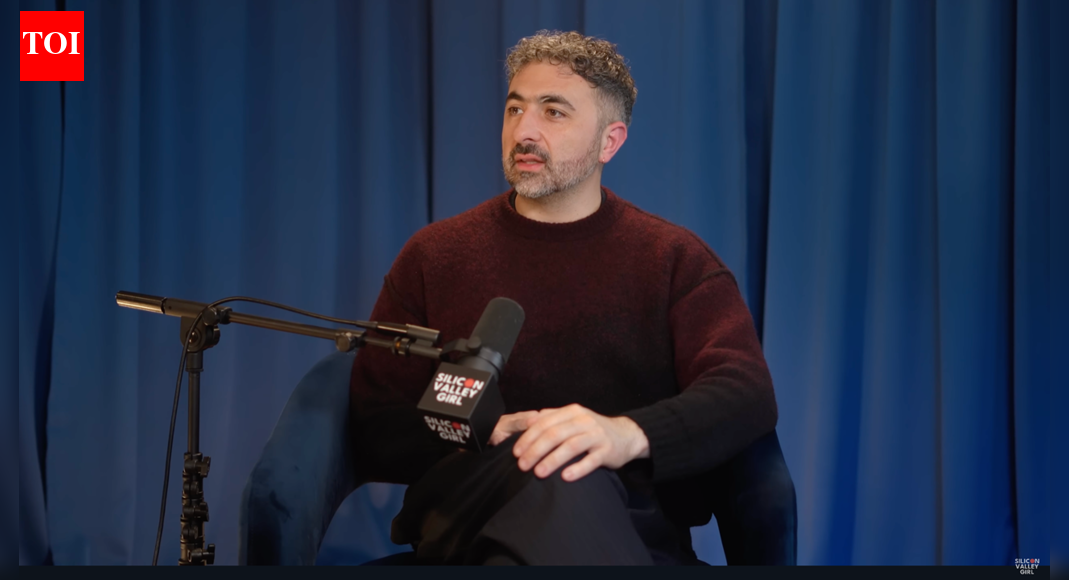
Microsoft AI CEO Mustafa Suleyman has once again cautioned researchers about developing specific capabilities for their AI. models. At a recent episode of the Silicon Valley Girl Podcast, Suleyman cautioned researchers against creating artificial superintelligence (ASI), AI with reasoning capabilities far beyond human capacity, stating that it should be considered an "anti-goal" instead of a developmental target.
Suleyman, who co-founded DeepMind, explained that the vision of an ASI “doesn't feel like a positive vision of the future” due to the risks of controlling it. He added, "It would be very hard to contain something like that or align it to our values."Meanwhile, he noted that his team is instead focused on developing a "humanist superintelligence," which will prioritise supporting human interests.
Apart from this, Suleyman also cautioned against equating high-level AI simulation with genuine sentience, saying that granting AI consciousness or moral status is an error.Microsoft Edge Gets a Major AI Upgrade with New Copilot Mode“These things don't suffer. They don't feel pain. They're just simulating high-quality conversation,”he explained.
Why are all AI leaders not on same page with building artificial superintelligenceSuleyman’s remarks come at a time when several industry figures are debating the possibility of developing artificial superintelligence, with some suggesting it could appear before the decade ends. ChatGPT maker OpenAI’s CEO, Sam Altman, has often described artificial general intelligence as the company’s central goal, and said earlier this year that OpenAI is already considering what comes after ASI."
Superintelligent tools could massively accelerate scientific discovery and innovation well beyond what we are capable of doing on our own, and in turn massively increase abundance and prosperity," Altman said in January. In a September interview, Altman also mentioned that he would be surprised if superintelligence did not emerge by 2030.
Moreover, Google DeepMind cofounder Demis Hassabis has suggested a similar timeframe, saying in April that ASI could be reached "in the next five to 10 years.""We'll have a system that really understands everything around you in very nuanced and deep ways and kind of embedded in your everyday life," he said.
Meanwhile, others remain cautious about ASI. Meta’s chief AI scientist, Yann LeCun, said ASI could still be "decades" away.In April, speaking at the National University of Singapore, LeCun said, “Most interesting problems scale extremely badly. You cannot just assume that more data and more compute means smarter AI.
”
Source coverage
News Metadata
Core Message: Caution Against Artificial Superintelligence (ASI)
Full source content
Microsoft AI CEO Mustafa Suleyman has once again cautioned researchers about developing specific capabilities for their AI. models. At a recent episode of the Silicon Valley Girl Podcast, Suleyman cautioned researchers against creating artificial superintelligence (ASI), AI with reasoning capabilities far beyond human capacity, stating that it should be considered an "anti-goal" instead of a developmental target.
Suleyman, who co-founded DeepMind, explained that the vision of an ASI “doesn't feel like a positive vision of the future” due to the risks of controlling it. He added, "It would be very hard to contain something like that or align it to our values."Meanwhile, he noted that his team is instead focused on developing a "humanist superintelligence," which will prioritise supporting human interests.
Apart from this, Suleyman also cautioned against equating high-level AI simulation with genuine sentience, saying that granting AI consciousness or moral status is an error.Microsoft Edge Gets a Major AI Upgrade with New Copilot Mode“These things don't suffer. They don't feel pain. They're just simulating high-quality conversation,”he explained.
Why are all AI leaders not on same page with building artificial superintelligenceSuleyman’s remarks come at a time when several industry figures are debating the possibility of developing artificial superintelligence, with some suggesting it could appear before the decade ends. ChatGPT maker OpenAI’s CEO, Sam Altman, has often described artificial general intelligence as the company’s central goal, and said earlier this year that OpenAI is already considering what comes after ASI."
Superintelligent tools could massively accelerate scientific discovery and innovation well beyond what we are capable of doing on our own, and in turn massively increase abundance and prosperity," Altman said in January. In a September interview, Altman also mentioned that he would be surprised if superintelligence did not emerge by 2030.
Moreover, Google DeepMind cofounder Demis Hassabis has suggested a similar timeframe, saying in April that ASI could be reached "in the next five to 10 years.""We'll have a system that really understands everything around you in very nuanced and deep ways and kind of embedded in your everyday life," he said.
Meanwhile, others remain cautious about ASI. Meta’s chief AI scientist, Yann LeCun, said ASI could still be "decades" away.In April, speaking at the National University of Singapore, LeCun said, “Most interesting problems scale extremely badly. You cannot just assume that more data and more compute means smarter AI.
”
How this page is built
Goose Pod turns cited reporting into a public episode summary first, then pairs that summary with audio playback so listeners can check the source material before they decide how deeply to engage.
The goal is to make this page useful as a news landing page first, while still giving listeners transcript access, related episodes, and direct links back to the original publishers.