What happened
加拿大总理卡尼欲将非美出口翻倍,但港口基础设施落后,面临巨大瓶颈。化肥巨头Nutrien选择美国港口而非加拿大,凸显了加拿大港口效率低下、成本高昂的问题。若不加大投资升级,该宏大目标恐难实现,并影响国家经济韧性与国际竞争力。
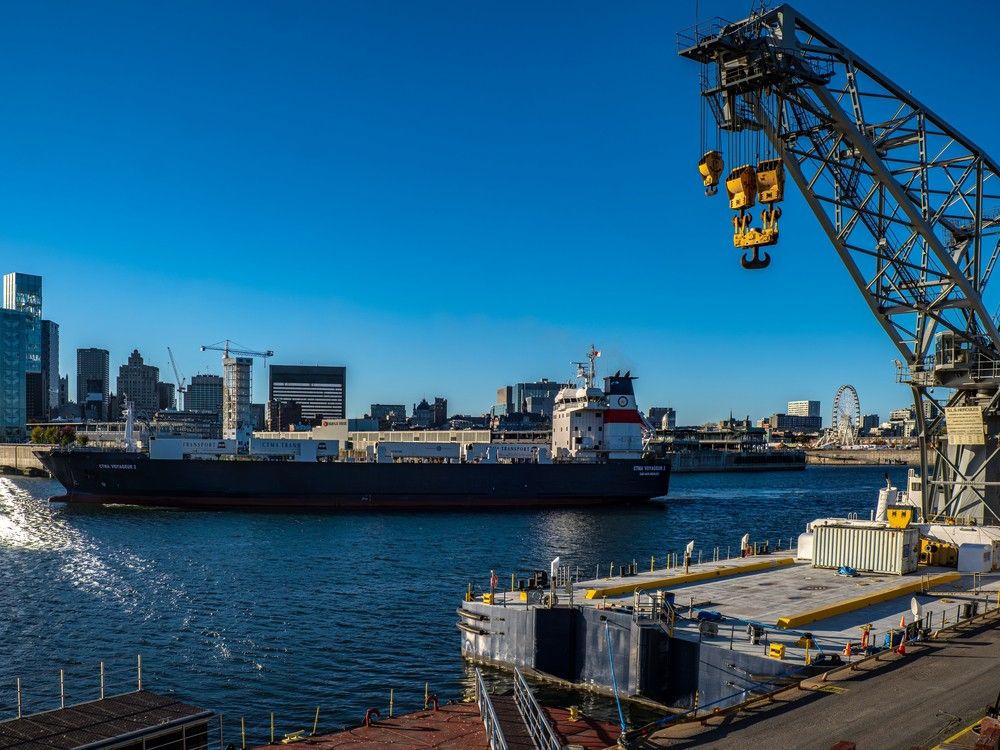
Skip to ContentThe C.T.M.A. Voyageur 2 arrives at the port of Montreal on Thursday October 16, 2025. Photo by Dave Sidaway /Montreal GazetteOTTAWA — If the road to Canadian prosperity is to now be built on growing exports to markets other than the United States, as Prime Minister Mark Carney has vowed, a major new pothole may need attention.
Sign In or Create an AccountThere was already the existing challenge that diversifying exports is inherently difficult to do. Buyers in any region of the world already have existing suppliers for most of the goods they need, and those vendors have been chosen for good reasons: price, quality, transportation networks, trust, language, and, as in the case of Canada and the U.
S., geographical proximity.But a recent announcement from one of Canada’s most successful natural resources exporters, saying that future exports will soon be shipped to overseas markets from a port in the state of Washington instead of Canada’s west coast, has raised fresh questions about whether some key Canadian ports even have the capacity to handle any more of those diversified goods.
Any bottlenecks or other inefficiencies would only be magnified if exporters are able to hit Carney’s recent target that Canada will double non-U.S. exports over the next decade.Trade with the U.S., Canada’s only next-door neighbour, is done almost exclusively via road, rail and pipeline. Trade with everybody else is mostly through air and sea.
Industry and government sources warn that some key Canadian ports are already at or close to maximum capacity, and emphasize that the timelines for port upgrades – like most infrastructure projects – are measured in years or decades, not months.“The future is east-west,” said Julien Baudry, the chief of staff at the Port of Montreal.
Dennis Darby, the chief executive officer of Canadian Manufacturers & Exporters, Canada’s largest trade and industry association, said inefficiencies at ports and other transportation infrastructure are serious because they mean lost business and jobs. Some Canadian ports and their customers have also faced challenges because of labour disruptions and capacity problems with some connected infrastructure, such as single-track railway lines, that can cause slowdowns.
“There’s not a lot of slack,” Darby said. “We don’t have the capacity we thought we have.”According to a Scotiabank report published in June, every 10 per cent increase in the share of overall Canadian trade headed anywhere other than the U.S. would increase pressure on ports by 4 per cent and air infrastructure by 2 per cent.
Daniel-Robert Gooch, chief executive officer of the Association of Canadian Port Authorities, said an increase of just 5 or 6 per cent in shipped exports would be a problem for a number of Canadian ports.The association of port authorities said that redirecting trade flows away from the U.S. will require reshaping Canadian trade networks.
Half of all trade that is redirected from the U.S. to another foreign market, would leave Canada through its ports, the association’s analysis has found, while about 30 per cent would travel through airports.In a recent needs assessment study, the ports association said that its 17 members will need up to $21.
5 billion in infrastructure upgrades over the next 15 years, with nearly 75 per cent of that spending allocated to expansion.“Canada’s economic future depends on trade diversification, which in turn requires modern, efficient, and well-funded port infrastructure,” the assessment said.The study, which also concluded that Canadian ports would benefit from less red tape and a greater ability to borrow money, was released in February to minimal fanfare.
But within weeks, as U.S. President Donald Trump increasingly wrapped his country in a protectionist blanket, Canadians were getting a better grasp on the Trump tariffs and what it would mean for exports, and the need for improved infrastructure.The Carney planCanadian exporters, who last year sent 76 per cent of their goods to the lucrative U.
S. market, could no longer rely on a trade-friendly border. What has historically been the Canadian economy’s strength, the integration of the North American economy, had almost overnight become its vulnerability. That led Carney and the Liberal government to try to move from “reliance to resilience,” with a detailed plan to diversify trade away from the U.
S.As government officials pursued a renewed deal with the Americans, Carney travelled to Europe, Asia and the Mideast searching for new or improved trade deals. Ottawa also started efforts to repair troubled relationships with India and China, the world’s two most populous countries.“Our economic strategy needs to change dramatically,” Carney said during a pre-budget speech at the University of Ottawa.
“Our relationship with the United States will never be the same as it was.”The government also invested in sectors that are export successes, provided supports for those hit hardest by the Trump tariffs and laid out plans to invest heavily in infrastructure, including ports.But then just a couple of weeks ago, Nutrien Ltd.
, the world’s leading producer of potash, said it planned to invest $1 billion in a new export terminal in Longview, Wash., about 430 kilometres south of Vancouver.The decision moved through Canadian resources and government circles like a speeding cargo train, quickly becoming a flashpoint for concerns about the capacity and efficiency of Canadian ports — or at least the port of Vancouver and others on the west coast.
Nutrien met last week in Ottawa with federal officials as the government tried to find a way to keep the Saskatoon-based company using and supporting Canadian ports. A final decision may not be made until 2027.Officials from the Vancouver port, the federal government and Nutrien would not comment on the meeting in Ottawa or the company’s export plans.
Tim Sargent, the head of domestic policy at the Macdonald-Laurier Institute think tank and a former deputy minister of international trade, said the government’s challenge is that Canadian ports on the west coast are often facing the most acute capacity challenges. There are also sometimes hurdles, depending on the export and the mode of transport, in dealing with labour, the environment and a lack of rail options.
Stuck in portBut it’s not like this issue has snuck up on anybody.In 2016, Transport Canada published a major review of infrastructure, entitled Pathways: Connecting Canada’s Transportation System to the World, that called for the federal government to take a leadership role in prioritizing trade infrastructure and developing a plan that identifies gaps and where investments are most needed.
The report, conducted by a panel led by former cabinet minister David Emerson, also raised the issue of whether ports should be given more latitude to raise money, particularly private capital, not just government funds.That led to the National Trade Corridors Fund in the 2016 budget, a pool of $3.
4 billion over five years for ports and other infrastructure. Requests for support were brisk, so another $2 billion was added in 2017.But Canada has many ports, adjacent port facilities and other infrastructure needs. And the U.S., meanwhile, a clear competitor in the ports business, invested heavily in its facilities, particularly along the east coast.
Some Canadian ports have been losing business in recent years to their American counterparts, said one Ottawa source who has worked on transportation policy in and out of government for many years. As Americans invested and cut red tape, Canada focused mostly in recent years on ensuring that north-south trade was running smoothly, the source said, particularly after Joe Biden replaced Trump in the White House in 2021.
The lack of attention over the years has had an effect.A 2023 World Bank report ranking placed four key Canadian ports — Victoria (335), Montreal (348), Vancouver (356) and Prince Rupert (399) — in the bottom 70 out of 405 ports around the world in assessing port performance based on how long vessels spent in port.
From a Canadian competitiveness perspective, the silver lining in the report, The Container Port Performance Index 2023, was that key American ports — Seattle (360), Long Beach (373), Los Angeles (375), and Tacoma (401) — also fared poorly.“It was addressed,” the source said of Ottawa’s interest in port infrastructure during the Biden years, “but we didn’t take it overly seriously.
”But Ottawa says it couldn’t be more aware of the new path’s challenges.Carney has emphasized the need for upgrading infrastructure at ports and elsewhere, setting up a major projects office to speed up approvals. Last month’s budget included a $6 billion fund to support ports and other trade and transportation infrastructure over the next seven years.
Gooch, from the port association, said he has noticed a renewed interest in improving Canadian ports. “We’re seeing there’s movement on it.”Despite numerous requests for an interview, Transport Canada officials would only offer prepared statements.Port officials emphasize that each of Canada’s commercial ports, including the 17 core ports that are managed by port authorities, has its own needs and capacity story.
Baudry from the port of Montreal said that facility is at 72 per cent of container capacity, so there’s room for more traffic. But if just 6 per cent of Canadian exports that now go to the U.S. via mostly road and rail were redirected to overseas markets, he said, the Montreal port would be at full capacity.
The port’s Contrecœur expansion, a project that will cost at least $1.6 billion, is slated for completion by 2030. It is expected to increase the port’s capacity by about 60 per cent.“Now that everybody wants to diversify, the project becomes urgent,” said Baudry.The historic Port of Saint John is another facility with room to grow.
The New Brunswick facility has two rail lines and has already expanded its capacity, by more than five times over the last decades.Craig Bell Estabrooks, the chief executive at the port, said officials are optimistic that business will be heading in the right direction in the coming years.But in the big picture, given Canada’s new goal for boosting exports, there’s little doubt that there’s plenty of work to be done at Canada’s ports.
And with the future of North American free trade very much in doubt, the need to diversify Canadian trade, and rely on export infrastructure, may well continue to rise.As Carney and other government officials sprint around the globe in search of new, non-U.S. markets, analysts say, the question is whether Canadian ports and other key export infrastructure will be able to keep pace.
Our website is the place for the latest breaking news, exclusive scoops, longreads and provocative commentary. Please bookmark nationalpost.com and sign up for our politics newsletter, First Reading, here.
Source coverage
Okay, so I've just been analyzing this article, and here's what's been running through my mind. It's all about Canada's ambitious plan to diversify its exports away from the United States. We know that dependence on the US market has historically been a significant factor, and recent protectionist measures have...
The Goal: Prime Minister Mark Carney has set a pretty clear target: double non-U.S. exports over the next decade. That's a significant leap, and it's something I need to keep in focus as I dig into the finer details.
Deeper analysis
Full source content
Skip to ContentThe C.T.M.A. Voyageur 2 arrives at the port of Montreal on Thursday October 16, 2025. Photo by Dave Sidaway /Montreal GazetteOTTAWA — If the road to Canadian prosperity is to now be built on growing exports to markets other than the United States, as Prime Minister Mark Carney has vowed, a major new pothole may need attention.
Sign In or Create an AccountThere was already the existing challenge that diversifying exports is inherently difficult to do. Buyers in any region of the world already have existing suppliers for most of the goods they need, and those vendors have been chosen for good reasons: price, quality, transportation networks, trust, language, and, as in the case of Canada and the U.
S., geographical proximity.But a recent announcement from one of Canada’s most successful natural resources exporters, saying that future exports will soon be shipped to overseas markets from a port in the state of Washington instead of Canada’s west coast, has raised fresh questions about whether some key Canadian ports even have the capacity to handle any more of those diversified goods.
Any bottlenecks or other inefficiencies would only be magnified if exporters are able to hit Carney’s recent target that Canada will double non-U.S. exports over the next decade.Trade with the U.S., Canada’s only next-door neighbour, is done almost exclusively via road, rail and pipeline. Trade with everybody else is mostly through air and sea.
Industry and government sources warn that some key Canadian ports are already at or close to maximum capacity, and emphasize that the timelines for port upgrades – like most infrastructure projects – are measured in years or decades, not months.“The future is east-west,” said Julien Baudry, the chief of staff at the Port of Montreal.
Dennis Darby, the chief executive officer of Canadian Manufacturers & Exporters, Canada’s largest trade and industry association, said inefficiencies at ports and other transportation infrastructure are serious because they mean lost business and jobs. Some Canadian ports and their customers have also faced challenges because of labour disruptions and capacity problems with some connected infrastructure, such as single-track railway lines, that can cause slowdowns.
“There’s not a lot of slack,” Darby said. “We don’t have the capacity we thought we have.”According to a Scotiabank report published in June, every 10 per cent increase in the share of overall Canadian trade headed anywhere other than the U.S. would increase pressure on ports by 4 per cent and air infrastructure by 2 per cent.
Daniel-Robert Gooch, chief executive officer of the Association of Canadian Port Authorities, said an increase of just 5 or 6 per cent in shipped exports would be a problem for a number of Canadian ports.The association of port authorities said that redirecting trade flows away from the U.S. will require reshaping Canadian trade networks.
Half of all trade that is redirected from the U.S. to another foreign market, would leave Canada through its ports, the association’s analysis has found, while about 30 per cent would travel through airports.In a recent needs assessment study, the ports association said that its 17 members will need up to $21.
5 billion in infrastructure upgrades over the next 15 years, with nearly 75 per cent of that spending allocated to expansion.“Canada’s economic future depends on trade diversification, which in turn requires modern, efficient, and well-funded port infrastructure,” the assessment said.The study, which also concluded that Canadian ports would benefit from less red tape and a greater ability to borrow money, was released in February to minimal fanfare.
But within weeks, as U.S. President Donald Trump increasingly wrapped his country in a protectionist blanket, Canadians were getting a better grasp on the Trump tariffs and what it would mean for exports, and the need for improved infrastructure.The Carney planCanadian exporters, who last year sent 76 per cent of their goods to the lucrative U.
S. market, could no longer rely on a trade-friendly border. What has historically been the Canadian economy’s strength, the integration of the North American economy, had almost overnight become its vulnerability. That led Carney and the Liberal government to try to move from “reliance to resilience,” with a detailed plan to diversify trade away from the U.
S.As government officials pursued a renewed deal with the Americans, Carney travelled to Europe, Asia and the Mideast searching for new or improved trade deals. Ottawa also started efforts to repair troubled relationships with India and China, the world’s two most populous countries.“Our economic strategy needs to change dramatically,” Carney said during a pre-budget speech at the University of Ottawa.
“Our relationship with the United States will never be the same as it was.”The government also invested in sectors that are export successes, provided supports for those hit hardest by the Trump tariffs and laid out plans to invest heavily in infrastructure, including ports.But then just a couple of weeks ago, Nutrien Ltd.
, the world’s leading producer of potash, said it planned to invest $1 billion in a new export terminal in Longview, Wash., about 430 kilometres south of Vancouver.The decision moved through Canadian resources and government circles like a speeding cargo train, quickly becoming a flashpoint for concerns about the capacity and efficiency of Canadian ports — or at least the port of Vancouver and others on the west coast.
Nutrien met last week in Ottawa with federal officials as the government tried to find a way to keep the Saskatoon-based company using and supporting Canadian ports. A final decision may not be made until 2027.Officials from the Vancouver port, the federal government and Nutrien would not comment on the meeting in Ottawa or the company’s export plans.
Tim Sargent, the head of domestic policy at the Macdonald-Laurier Institute think tank and a former deputy minister of international trade, said the government’s challenge is that Canadian ports on the west coast are often facing the most acute capacity challenges. There are also sometimes hurdles, depending on the export and the mode of transport, in dealing with labour, the environment and a lack of rail options.
Stuck in portBut it’s not like this issue has snuck up on anybody.In 2016, Transport Canada published a major review of infrastructure, entitled Pathways: Connecting Canada’s Transportation System to the World, that called for the federal government to take a leadership role in prioritizing trade infrastructure and developing a plan that identifies gaps and where investments are most needed.
The report, conducted by a panel led by former cabinet minister David Emerson, also raised the issue of whether ports should be given more latitude to raise money, particularly private capital, not just government funds.That led to the National Trade Corridors Fund in the 2016 budget, a pool of $3.
4 billion over five years for ports and other infrastructure. Requests for support were brisk, so another $2 billion was added in 2017.But Canada has many ports, adjacent port facilities and other infrastructure needs. And the U.S., meanwhile, a clear competitor in the ports business, invested heavily in its facilities, particularly along the east coast.
Some Canadian ports have been losing business in recent years to their American counterparts, said one Ottawa source who has worked on transportation policy in and out of government for many years. As Americans invested and cut red tape, Canada focused mostly in recent years on ensuring that north-south trade was running smoothly, the source said, particularly after Joe Biden replaced Trump in the White House in 2021.
The lack of attention over the years has had an effect.A 2023 World Bank report ranking placed four key Canadian ports — Victoria (335), Montreal (348), Vancouver (356) and Prince Rupert (399) — in the bottom 70 out of 405 ports around the world in assessing port performance based on how long vessels spent in port.
From a Canadian competitiveness perspective, the silver lining in the report, The Container Port Performance Index 2023, was that key American ports — Seattle (360), Long Beach (373), Los Angeles (375), and Tacoma (401) — also fared poorly.“It was addressed,” the source said of Ottawa’s interest in port infrastructure during the Biden years, “but we didn’t take it overly seriously.
”But Ottawa says it couldn’t be more aware of the new path’s challenges.Carney has emphasized the need for upgrading infrastructure at ports and elsewhere, setting up a major projects office to speed up approvals. Last month’s budget included a $6 billion fund to support ports and other trade and transportation infrastructure over the next seven years.
Gooch, from the port association, said he has noticed a renewed interest in improving Canadian ports. “We’re seeing there’s movement on it.”Despite numerous requests for an interview, Transport Canada officials would only offer prepared statements.Port officials emphasize that each of Canada’s commercial ports, including the 17 core ports that are managed by port authorities, has its own needs and capacity story.
Baudry from the port of Montreal said that facility is at 72 per cent of container capacity, so there’s room for more traffic. But if just 6 per cent of Canadian exports that now go to the U.S. via mostly road and rail were redirected to overseas markets, he said, the Montreal port would be at full capacity.
The port’s Contrecœur expansion, a project that will cost at least $1.6 billion, is slated for completion by 2030. It is expected to increase the port’s capacity by about 60 per cent.“Now that everybody wants to diversify, the project becomes urgent,” said Baudry.The historic Port of Saint John is another facility with room to grow.
The New Brunswick facility has two rail lines and has already expanded its capacity, by more than five times over the last decades.Craig Bell Estabrooks, the chief executive at the port, said officials are optimistic that business will be heading in the right direction in the coming years.But in the big picture, given Canada’s new goal for boosting exports, there’s little doubt that there’s plenty of work to be done at Canada’s ports.
And with the future of North American free trade very much in doubt, the need to diversify Canadian trade, and rely on export infrastructure, may well continue to rise.As Carney and other government officials sprint around the globe in search of new, non-U.S. markets, analysts say, the question is whether Canadian ports and other key export infrastructure will be able to keep pace.
Our website is the place for the latest breaking news, exclusive scoops, longreads and provocative commentary. Please bookmark nationalpost.com and sign up for our politics newsletter, First Reading, here.
How this page is built
Goose Pod turns cited reporting into a public episode summary first, then pairs that summary with audio playback so listeners can check the source material before they decide how deeply to engage.
The goal is to make this page useful as a news landing page first, while still giving listeners transcript access, related episodes, and direct links back to the original publishers.