
What happened
Report Provider: The Guardian
Author: Richard Partington
Date Covered: June 2025 (figures released July 16th)
UK inflation unexpectedly rose in June driven by fuel and food prices, according to official figures, underscoring the challenge facing the chancellor, Rachel Reeves.The Office for National Statistics said the consumer prices index rose by 3.6% last month. City economists and the Bank of England had forecast it would remain the same as May’s reading of 3.
4%.The increase was largely caused by petrol and diesel prices falling only slightly in June compared with a much larger decrease a year earlier, alongside food price inflation rising for a third consecutive month to the highest rate in more than a year.Driving the headline rate further away from the Bank’s 2% target, the rise was announced as Labour faces intense scrutiny over its economic management after two months of negative growth and with speculation mounting over tax rises.
On Tuesday Reeves sought to shrug off Britain’s anaemic growth performance in her Mansion House speech, telling City bankers she would cut red tape to help reboot the economy.However, critics said that the chancellor’s maiden budget had added to Britain’s economic headwinds, including a £25bn increase in employment taxes that business leaders warned would force them to cut jobs and raise prices.
Some analysts said there were early signs of businesses passing on higher employment costs to consumers after a rise in the cost of restaurant meals, hotel stays and the price of supermarket groceries.Kris Hamer, the director of insight at the British Retail Consortium, said: “Despite fierce competition between retailers, the ongoing impact of the last budget and poor harvests caused by the extreme weather have resulted in prices for consumers rising.
”Mel Stride, the shadow chancellor, said: “Labour’s decision to tax jobs and ramp up borrowing is killing growth and stoking inflation – making everyday essentials more expensive.”Reeves acknowledged there was “more to do” to put more money into people’s pockets. “I know working people are still struggling with the cost of living.
That is why we have already taken action by increasing the national minimum wage for 3 million workers, rolling out free breakfast clubs in every primary school and extending the £3 bus fare cap,” she said.The UK’s annual inflation rate has risen this year after dramatic increases in water bills, energy costs and council tax, complicating the Bank’s approach to cutting interest rates.
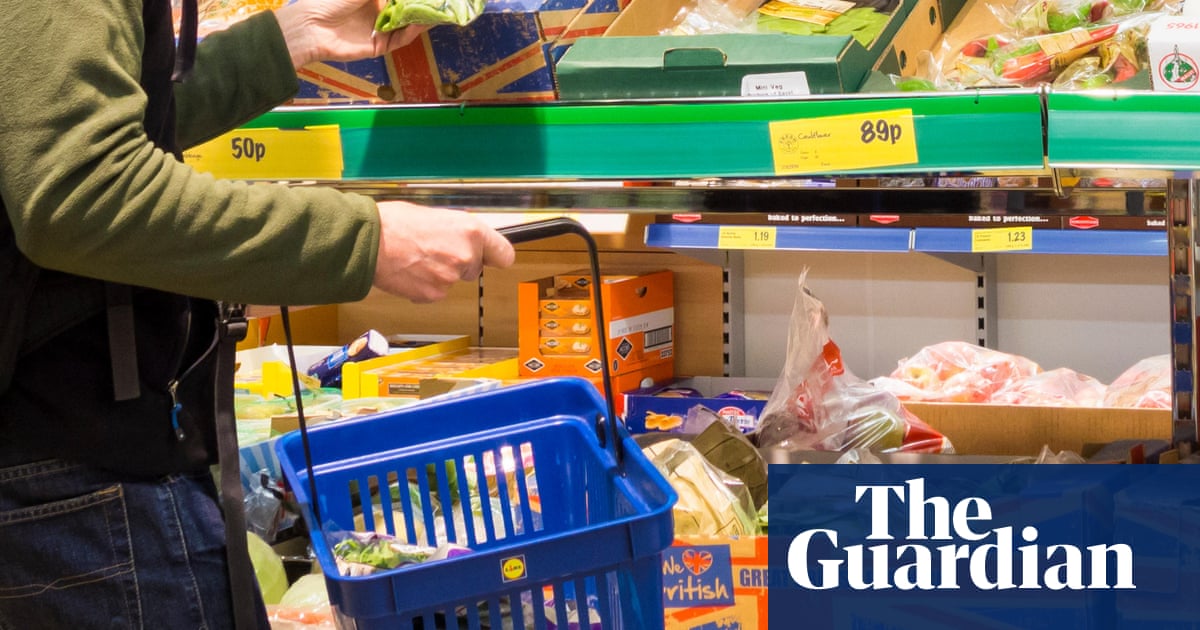
Threadneedle Street forecasts that inflation will peak at 3.7% in September – almost twice its 2% target rate.Inflation graphicHighlighting the pressure on households, the latest figures show food and drink inflation jumped to 4.5%, the highest recorded since February 2024, driven by the rising price of cakes, meat, milk, eggs and cheddar cheese.
Motor fuel prices fell by 9% in the year to June 2025 compared with a drop of 10.9% in the year to May. Because prices fell by less than a year earlier, this contributes to pushing up the annual inflation rate.skip past newsletter promotionafter newsletter promotionWhile the average petrol price fell to 131.
9p a litre last month, compared with 145.8p a year earlier, the drop between June and May was 0.5p, versus a much larger 3p fall between the same two months in 2024.Diesel prices also fell less sharply than a year earlier, with a month-on-month decline of 0.6p a litre in June 2025, compared with a drop of 4.
8p in 2024. The average diesel price fell annually from 151.5p to 138.5p a litre.While the Bank has cut its base interest rate four times in the past year, most recently in May, to 4.25%, economists said evidence of lingering high inflation could delay further reductions.Services inflation, a measure the central bank views as a better guide to domestically generated price pressures than the headline rate, unexpectedly held steady at 4.
7% in June, led by the largest June increase in air fares since 2018. City economists had predicted a modest fall to 4.6%.However, concerns are growing over the strength of the UK economy amid a slowdown in the jobs market and as Donald Trump’s erratic trade war weighs on the global outlook. Official figures due on Thursday are expected to show a further cooling in the labour market in the three months to May.
Suren Thiru, the economics director at the Institute of Chartered Accountants in England and Wales, said: “While June’s hot inflation won’t deter policymakers from sanctioning an August policy loosening, given mounting worries over economic conditions, these figures may increase caution over the pace of future rate cuts.
”
Source coverage
Report Provider: The Guardian
Author: Richard Partington
Deeper analysis
Full source content
UK inflation unexpectedly rose in June driven by fuel and food prices, according to official figures, underscoring the challenge facing the chancellor, Rachel Reeves.The Office for National Statistics said the consumer prices index rose by 3.6% last month. City economists and the Bank of England had forecast it would remain the same as May’s reading of 3.
4%.The increase was largely caused by petrol and diesel prices falling only slightly in June compared with a much larger decrease a year earlier, alongside food price inflation rising for a third consecutive month to the highest rate in more than a year.Driving the headline rate further away from the Bank’s 2% target, the rise was announced as Labour faces intense scrutiny over its economic management after two months of negative growth and with speculation mounting over tax rises.
On Tuesday Reeves sought to shrug off Britain’s anaemic growth performance in her Mansion House speech, telling City bankers she would cut red tape to help reboot the economy.However, critics said that the chancellor’s maiden budget had added to Britain’s economic headwinds, including a £25bn increase in employment taxes that business leaders warned would force them to cut jobs and raise prices.
Some analysts said there were early signs of businesses passing on higher employment costs to consumers after a rise in the cost of restaurant meals, hotel stays and the price of supermarket groceries.Kris Hamer, the director of insight at the British Retail Consortium, said: “Despite fierce competition between retailers, the ongoing impact of the last budget and poor harvests caused by the extreme weather have resulted in prices for consumers rising.
”Mel Stride, the shadow chancellor, said: “Labour’s decision to tax jobs and ramp up borrowing is killing growth and stoking inflation – making everyday essentials more expensive.”Reeves acknowledged there was “more to do” to put more money into people’s pockets. “I know working people are still struggling with the cost of living.
That is why we have already taken action by increasing the national minimum wage for 3 million workers, rolling out free breakfast clubs in every primary school and extending the £3 bus fare cap,” she said.The UK’s annual inflation rate has risen this year after dramatic increases in water bills, energy costs and council tax, complicating the Bank’s approach to cutting interest rates.
Threadneedle Street forecasts that inflation will peak at 3.7% in September – almost twice its 2% target rate.Inflation graphicHighlighting the pressure on households, the latest figures show food and drink inflation jumped to 4.5%, the highest recorded since February 2024, driven by the rising price of cakes, meat, milk, eggs and cheddar cheese.
Motor fuel prices fell by 9% in the year to June 2025 compared with a drop of 10.9% in the year to May. Because prices fell by less than a year earlier, this contributes to pushing up the annual inflation rate.skip past newsletter promotionafter newsletter promotionWhile the average petrol price fell to 131.
9p a litre last month, compared with 145.8p a year earlier, the drop between June and May was 0.5p, versus a much larger 3p fall between the same two months in 2024.Diesel prices also fell less sharply than a year earlier, with a month-on-month decline of 0.6p a litre in June 2025, compared with a drop of 4.
8p in 2024. The average diesel price fell annually from 151.5p to 138.5p a litre.While the Bank has cut its base interest rate four times in the past year, most recently in May, to 4.25%, economists said evidence of lingering high inflation could delay further reductions.Services inflation, a measure the central bank views as a better guide to domestically generated price pressures than the headline rate, unexpectedly held steady at 4.
7% in June, led by the largest June increase in air fares since 2018. City economists had predicted a modest fall to 4.6%.However, concerns are growing over the strength of the UK economy amid a slowdown in the jobs market and as Donald Trump’s erratic trade war weighs on the global outlook. Official figures due on Thursday are expected to show a further cooling in the labour market in the three months to May.
Suren Thiru, the economics director at the Institute of Chartered Accountants in England and Wales, said: “While June’s hot inflation won’t deter policymakers from sanctioning an August policy loosening, given mounting worries over economic conditions, these figures may increase caution over the pace of future rate cuts.
”
How this page is built
Goose Pod turns cited reporting into a public episode summary first, then pairs that summary with audio playback so listeners can check the source material before they decide how deeply to engage.
The goal is to make this page useful as a news landing page first, while still giving listeners transcript access, related episodes, and direct links back to the original publishers.